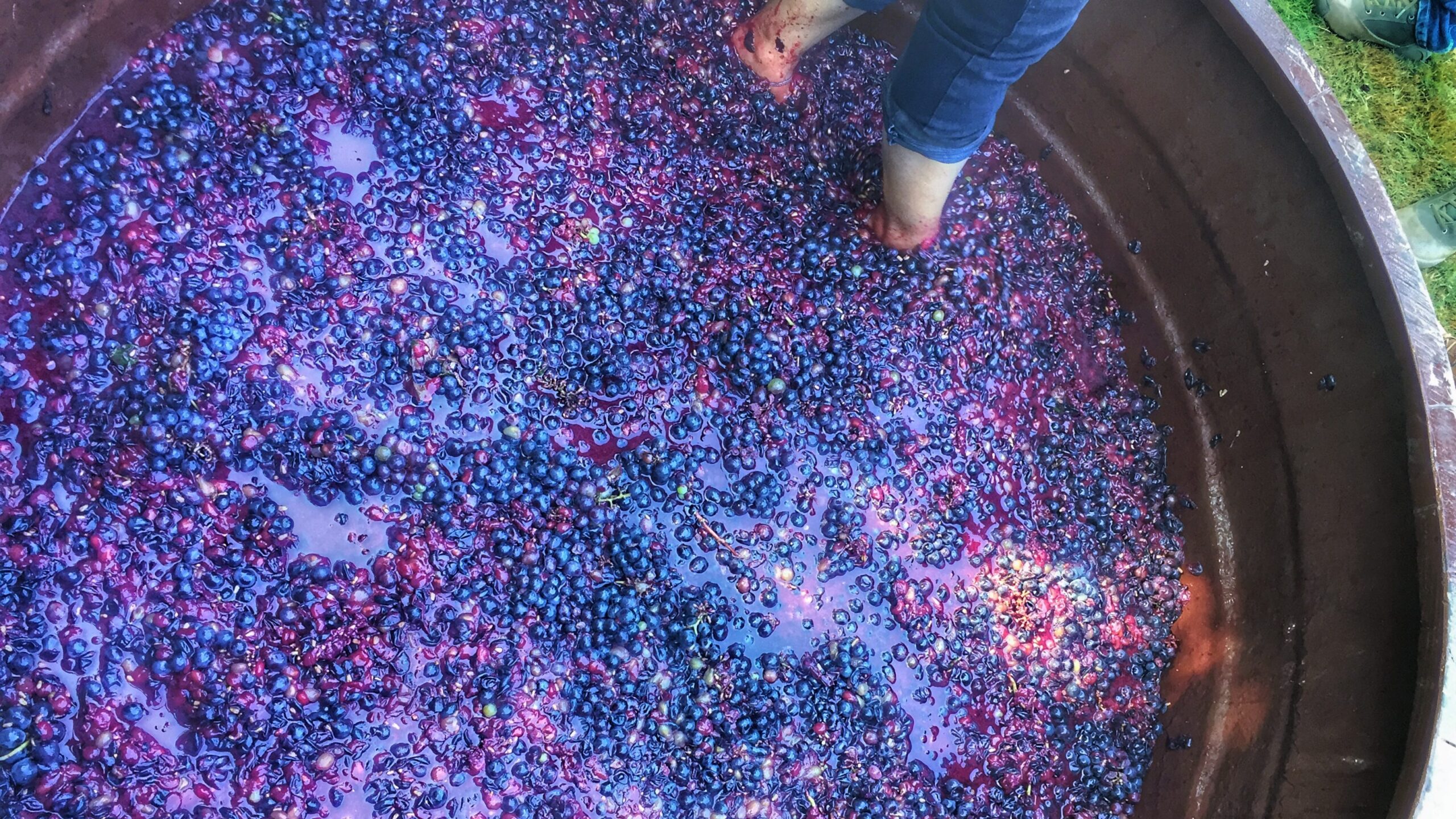
When you think of crushing grapes at a winery you picture people stomping grapes or a man cranking an old fashioned basket press. Both are correct and really happen. But neither is the main method used by modern wineries to crush grapes.
At Carlson Creek, we use a large piece of machinery called pneumatic bladder press. Other wineries use other heavy equipment like winemakers in France who use a hydraulic power press. There have been so many different ways to do it, that in Spain there is a museum with hundreds of wine presses spanning centuries and even millennia.
Press it or Crush it?
Crush is the action of breaking the grapes to get the juice out. We also call harvest time in the winery ‘Crush’, since it is an essential step and denotes the hectic nature of harvest season. Pressing is when pressure is applied to those crushed grapes to remove the juice. Think of the crush as the breaking of the grape, and pressing as the squeeze that juices it.
Feet first
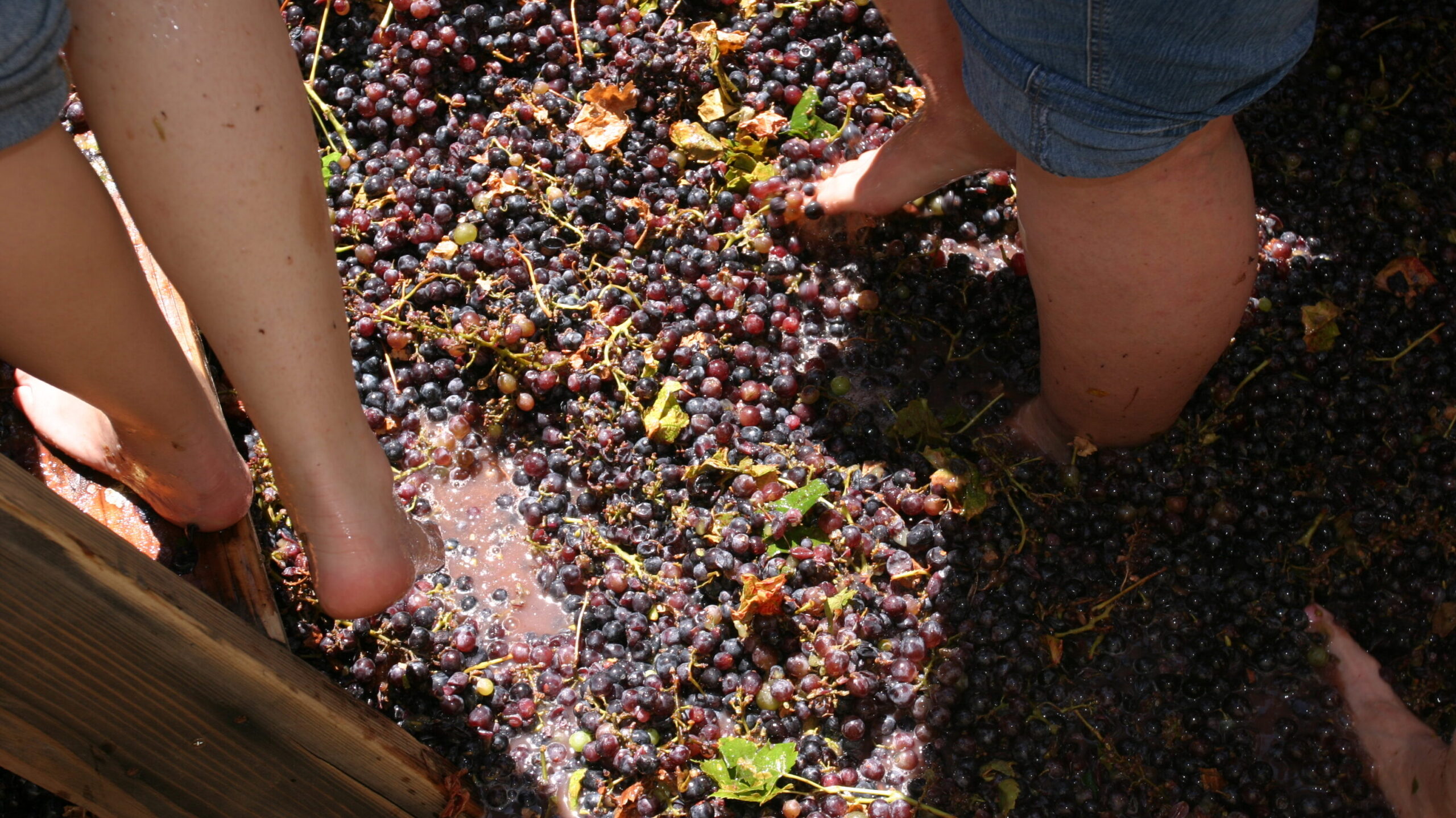
Thanks to I Love Lucy, we all have an image in our minds of women stomping grapes. It looks really fun and we can tell you it is, at first. In a modern winery there is far less stomping than there once was. Today it is only used for special lots of wine making.
To do it correctly you start with cleaning by sanitizing your feet just like any other piece of equipment. Since modern wineries take sanitation seriously, we clean everything. The stainless steel tanks, the French oak barrels, and even our feet get the full treatment. Once sanitized you are like a surgeon scrubbed in for an operation you do not touch anything with your feet except for the grapes.
The first thing you will notice is how cold the grapes are on your feet. You will also be glad you have a friend helping you into the vats. Grapes are not a stable surface to stand on. A few minutes of stomping and you start to sweat. Your legs are pumping, your core is trying to maintain balance, and your heart is racing. The movies make it look relaxing. But it is like trying to break up quick sand. In the end it is really fun, but it is also tiring.
The Basket Case

This is the iconic basket press featured here in Napa Valley. Remember the distinction between crushing and pressing? Once crushed, the grapes can be put in the basket press. Each turn of the lever lowers a screw driven press plate onto the grapes.
Another human powered method. Once the press gets low it the cranking becomes more difficult. Every turn produces a little more juice, as well as tires the arms and backs. This was a standard piece of equipment for centuries. Now home winemakers still use these on a small scale, but they are rare in a modern winery.
Let the Machines do the Work
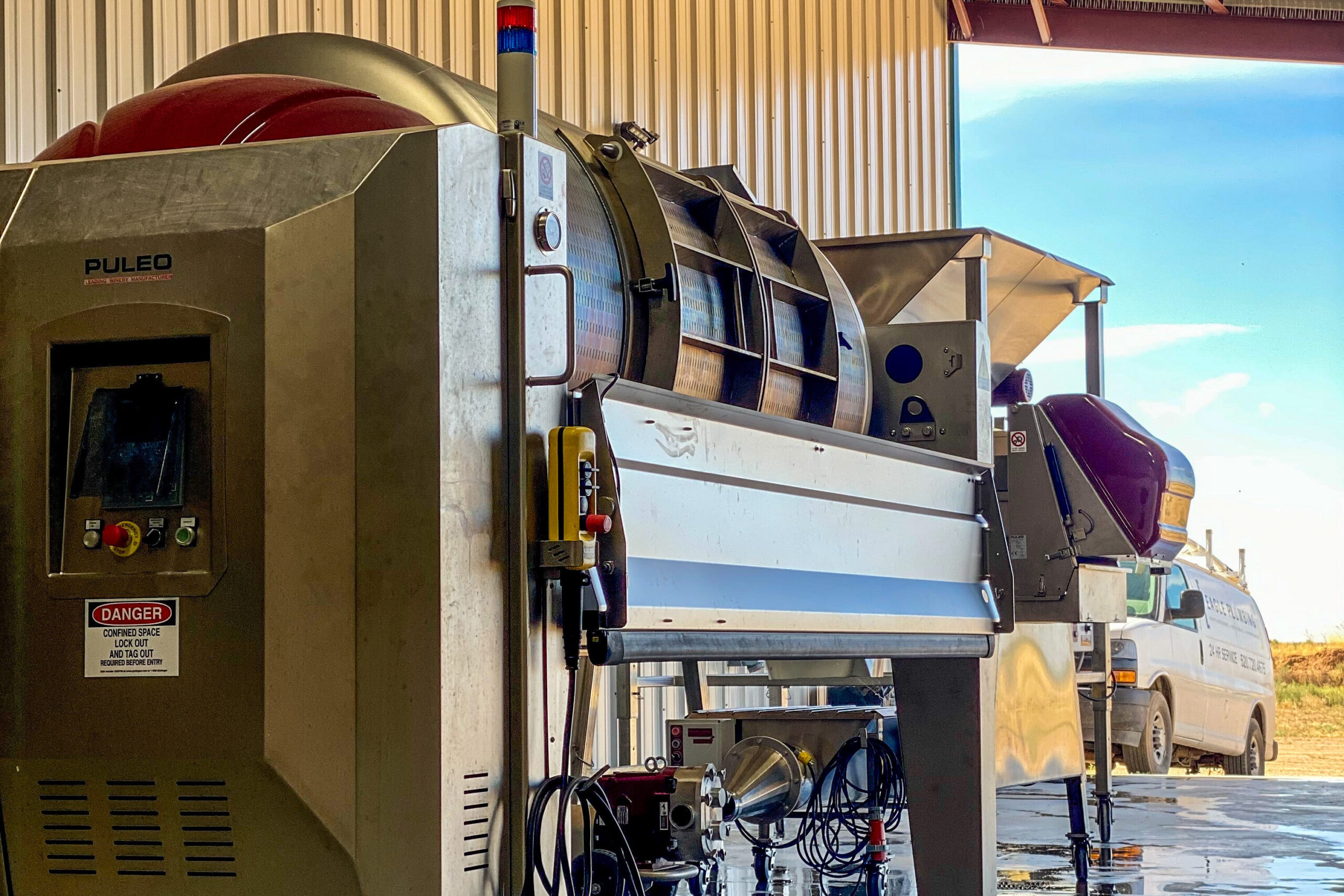
We crush our grapes with a cleverly named, crusher destemmer. This takes out all those stems that hold the grapes together in a bunch out and gently breaks the grapes. The grapes drop between two spinning drums through a small gap. The drums break the skins without pulverizing them. It is like gently pinching a grape between your finger tips till it opens up.
After all that stomping and cranking, pushing a button seems like a dream. The next button we push is on our pneumatic bladder press. It is about the size of a small school bus. Inside a large perforated drum is an inflatable bladder. The drum spins while the bladder gently forces the grapes against the perforated drum, pressing out the grape juice. The liquid then pours out into a tray and then is pumped into a tank.
This is a wonderful piece of equipment, but it is a lot of cleaning especially since grapes and seeds get caught in the holes. You actually have to get inside of it to clean it. When cleaning we always ensure the machine is off before anyone climbs in. Carlson Creek, like most wineries, have strict lockout and safety procedures to protect our team.
Other Tools of the Trade
The basket press has not been totally exiled from wineries. The descendant of this age-old device is the hydraulic basket press. It is used widely in Champagne. These massive heavy machines are for making high-quality juice without crushing first. Whole clusters of grapes are put into the machine and pressed. The machine gives less skin contact and thus a clearer juice to make into their world famous wine.
There is also the screw press. A big augur moves grapes forward through a narrowing cylinder, forcing the juice out. These machines are massive. They are used by industrial wineries to make huge amounts of wine. In the other methods you have to do your crushing and pressing in lots. This machine is continuous, so you can just keep putting grapes in it all day long. Though you would need to stop and clean it between red and white grapes.
The Difference Between Pressing Whites and Reds
When pressing white grapes and red grapes timing is the major difference. Wineries generally press white grapes right after harvest before fermentation. Red grapes are pressed after fermentation. We do this because of skin contact. The color in wine comes from the skins, most grape juice is colorless.
For white wine you want to get the juice off the skins fast to give it the clearest color possible. As for red wine, the skins are left in the juice as it ferments. The mixture of crushed grapes, skins, seeds and juice is called a must. It is like steeping tea. The longer the tea leaves are in the water the darker and stronger the tea. Once the fermentation is done, and all that glorious color extract, the wine is pressed out of the must.
A World Without Crushing
You do not even need to crush the grapes to make wine. You can put grapes in a sealed tank excluding oxygen and the grapes will burst through a process called carbonic maceration. Carbonic Maceration is when a small amount of fermentation happens in the grape and causes it to pop. This is how Beaujolais Nouveau is made, and it gives a distinct bubble gum flavor.
There is no wrong way to crush grapes. A winemaker we know once used a trash can and a baseball bat to crush Cabernet Sauvignon. Experimentation has been going on in the wine industry for thousands of years. It is what gave us our modern equipment, and the ability to more closely control the process.
At Carlson Creek we like to experiment with different methods. We will produce small lots of wine to learn what new methods work for us. Not just crushing and pressing, but in every step of the process. We release the successes in small batches to our Wine Society. Should you want to try these experiments you can join our Wine Society online or at one of our tasting rooms.
Cheers,
The Carlson Creek Team
Leave a Reply