Yes, but it will not look the same as it does today. In many ways the Arizona wine industry has been adapting to climate change for longer than other regions. Our grapes already grow in a hot place. It is like an island nation that is much more attuned to rising sea levels. One hundred and fifty years ago there were wine grapes growing in Phoenix. Today any grape vines growing there are purely decorative. Arizona wineries have been attuned to these changes and have had to adapt to new locations, new farming practices, and new grape varieties.
The Future of Climate Change in Arizona
It is not an accident that the industry was remade at higher elevation. The cooling effects of elevation are well documented. The trick here is we did not watch the change because Prohibition caused a gap in the existence of the industry. It had to be rebuilt from the literal ground up. The conditions that the modern farmer faced were different than in the 1800s. When one steps back, the direction to this trend is apparent
A bottle of wine can be made from any fruit. It is true that regions of the country have wineries that do not use Vitis vinifera grapes or rely on hybrids. There is not a future where cactus wine will become popular as the next Arizona wine. Though the saguaro cactus is an extremely big canary in this coal mine. This is a plant famous for its adaptation to the dry heat of the lower elevations. But the rise in temperatures is killing them at an alarming rate. That alone should convince any remaining skeptics how serious the heat stress has become.
What We Farm: New Names on the Bottle
No cactus but there may be new grapes. In 2021 Bordeaux approved six new grape varieties for the wine region. Bordeaux, like all French growing areas, regulated most aspects of wine making, including what grapes can be grown. The new varieties are more heat resistant and deal better with the shorter growth cycles. We discuss these exact conditions here in Arizona in our article: Harvest Timing in Arizona.
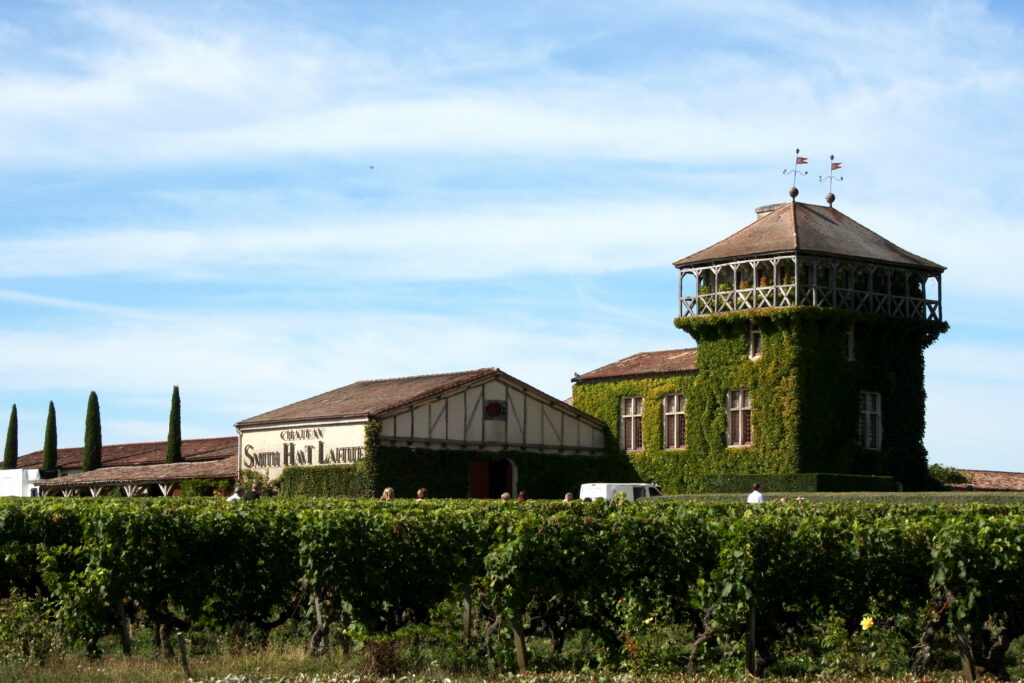
The Bordelais spent decades researching these grapes. They are confident they will need it to flourish in the future. If Arizona wine continues to grow it will need to adapt in a similar fashion. One of the newly approved varieties, Touriga Nacional, is already grown in Arizona. Vineyards will have to rip out less suitable grape vines and plant either these grapes or grape vines that show similar potential for resilience. This will change the flavors and the names we are used to seeing.
Where We Farm: Winery Will Climb the Mountains
Arizona is not all desert. Years ago, Carlson Creek consulted on a new vineyard site that sat at over six thousand feet. The plot was a part of the massive pine forest that covers much of the northern part of the state. At the time we advised them not to move forward, since the winter temperatures were low enough to kill grape vines. The only solution was to bury the vines over the winter. In the future this vineyard site will be a viable option. There will be interesting new vineyard locations opened.
We do not expect all the new locations to be so extreme. But we will see more vineyards at higher elevations. Luckily, the major wine regions are near mountains. In Sonoita’s case, the borders of its American Viticultural Area are literal mountain peaks. In Willcox there are already vineyards in the Chiricahua foothills, near the Chiricahua National Monument. As a side note, this is a wonderful place to visit, with spectacular rock formations, great hiking, and no crowds.
How We Farm: Learning How to weave
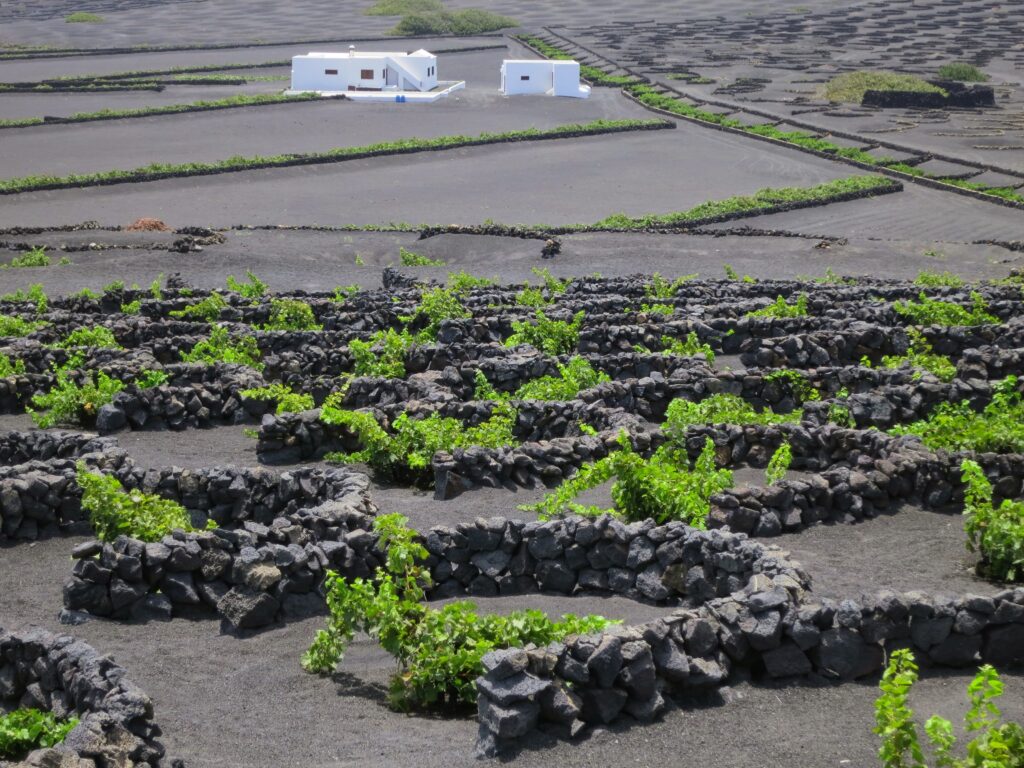
Viticulture practices are not uniform across the world. Look at the image above. It is a picture from the Spanish island of Lanzarote. This is the pit method, or crater method. A single vine grows in a pit with a rock wall protecting it. The crater provides protection from the wind and a focal point for rain to drain down to the grapevine. The vines grow without irrigation.
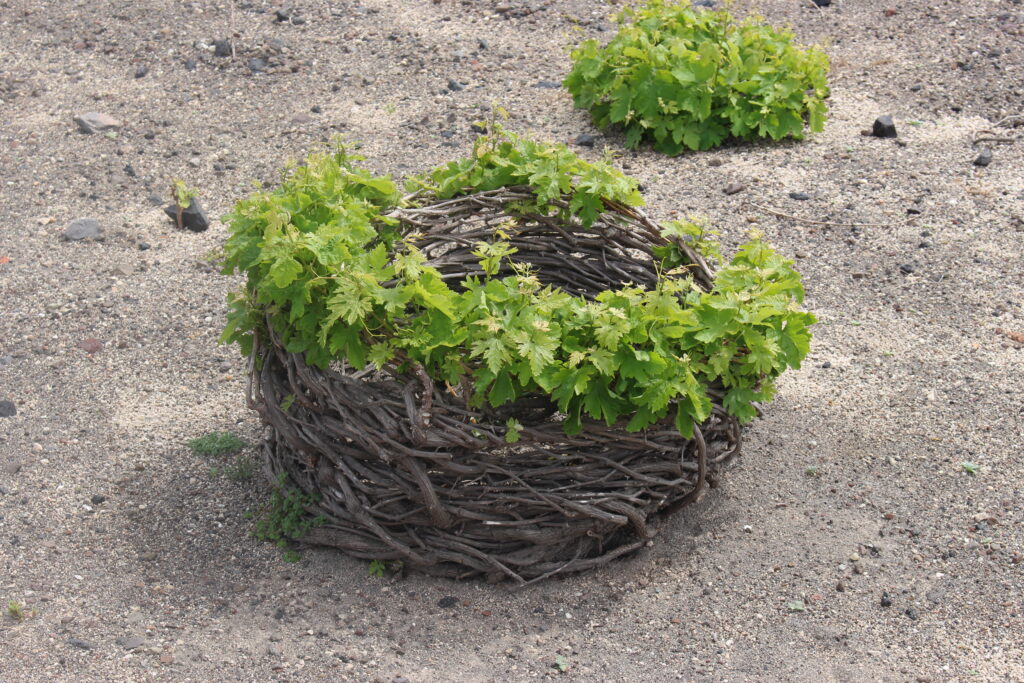
Now consider the basket vines of Santorini. This Greek method weaves the vines into a protective wreath for the grapes to shelter until they are ready to be picked. The grapes are sheltered from the heat, and the moisture is trapped inside. Both techniques have been around for hundreds of years. There are regions of the world that have experienced the conditions Arizona is heading towards, and they have managed to make great wines.
Water into Wine
As we adopt new farming techniques, new locations and new varieties it is only natural to develop new winery practices. Wineries use a large amount of water. This water is for sanitation. Tanks, barrels, and equipment all need to be washed before and after every use. All that water goes down a drain.
Water recycling is gaining speed in the wine industry. It is expensive now. But as the high-water use industries invest in this problem, like data centers, technology will decrease in price and increase in efficiency. Wineries will need to adapt to this practice, even if they are not forced to by regulation. From a public relations standpoint, consumers who have their lawns removed due to water shortages would like to know that the winery they visit is doing its part.
At Carlson Creek we have an eye to all of this. We use high-efficiency drip systems to reduce water use. Our vineyard is a patchwork of different grape varieties, and we are constantly monitoring their performance. We may not be able to move but we are already experimenting with new trellising methods. We share our thought beyond this in: What is the Future for Arizona Wine?
The future of Arizona wine lies with you dear reader. You can help the Arizona wine industry keep adapting, experimenting and improving by ordering wine, visiting our tasting room, or joining our Wine Society.
Cheers,
The Carlson Creek Team
Leave a Reply