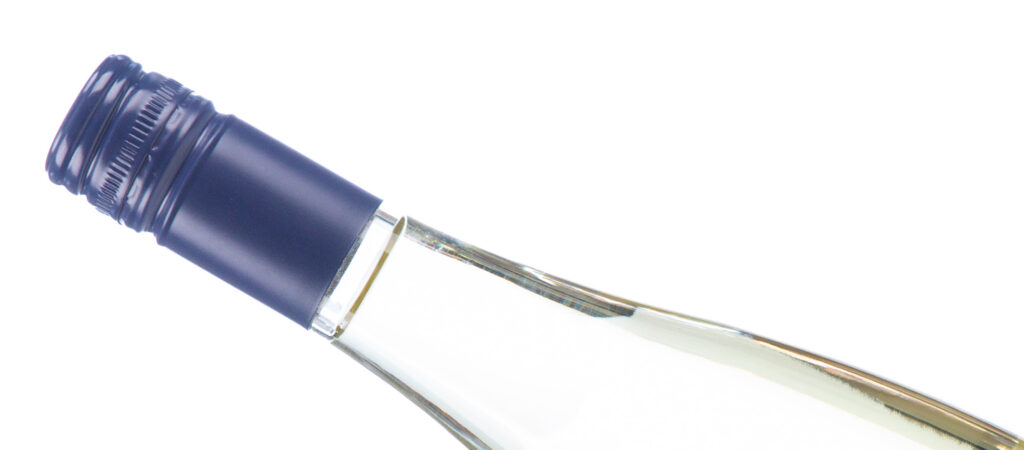
The answer is not necessarily. Historically, cheap wine used screw caps, but that has changed. Screw caps are a wonderful invention, but they have a bad reputation. The most widely used modern screw cap is called the Stelvin closure. It inherited some bad press from its predecessors. The screw does a great job as a wine closure. It forms a near perfect seal, it is easy to open, and it is recyclable.
A Brief History of How Screw Caps got Screwed
The industry standard modern Stelvin screw cap was developed in France during the 1960 and 1970s, in conjunction with a group of global wineries. They were trying to solve cork taint. It is an insidious condition that silently ruins wine. The culprit is TCA (trichloroanisole) which is a chemical byproduct produced by certain fungi and molds that occasionally are found in or on cork bark. It is non-toxic, but we are very sensitive to its smell. It makes the wine smell like wet cardboard, effectively ruining it.
Rates of cork taint were much higher back then. Today the cork industry does rigorous testing and quality control to keep the number low, but they are not zero. Cork taint still occurs. If you happen to get a bottle that smells like wet cardboard, send it back and ask that it be replaced.
How it Works
Simply put, it is plastic cap inside with a metal sleeve. The plastic forms a seal with the glass and the metal holds everything tightly into place. During bottling, we place the caps loosely on the top of the bottles, either by machine or by hand. To make a snug fit the bottle goes through a spinner.
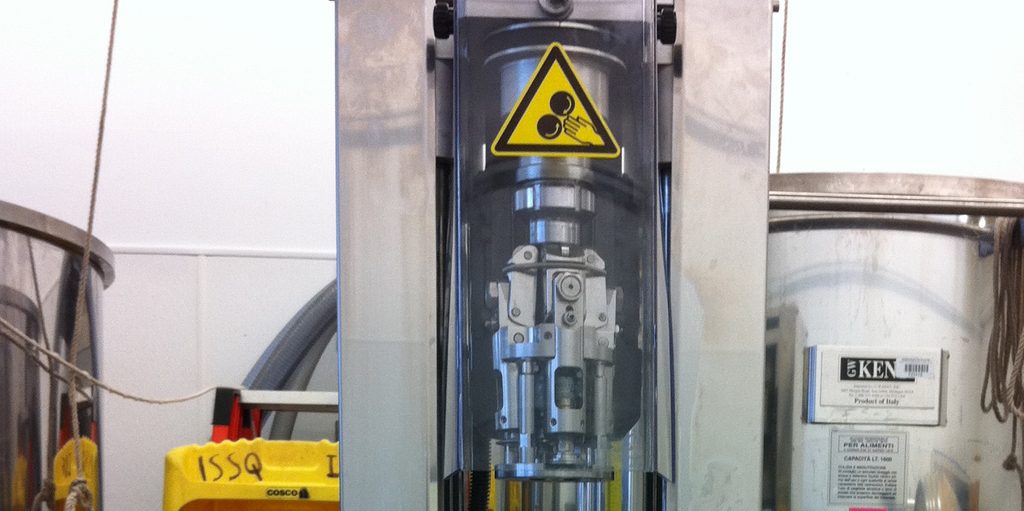
The spinner literally molds the metal to the form of the bottle top. Spinning discs move up and down smoothing the metal and ensure the plastic is cinched to the bottle top creating a nearly hermetic seal. The seal lets next to no oxygen come into contact with the wine. You can think of this as a freshness seal
Benefits of the Screw Cap
That is one of the big reasons why it is used on wines that are meant to be drunk young. For instance a sweet wine, a Sauvignon Blanc, or a low tannin red wine. A crisp fruity wine does not need to age. The winemaker wants you to drink the wine as is. By using a screw cap they can ensure you get the best experience of the wine possible.
It is the easiest wine closure to open. A simple turn of the wrist, not tools necessary. Corks, synthetic cork, glass stoppers all require far more effort. It is also cheaper for the winery than corks. Though the price comparison does vary depending on the supply of cork, it is just about always cheaper to use a screw cap. As we noted above, you should return a cork tainted wine, wineries that use screw caps do not have the problem of replacing returns. Screw caps also fail less than corks. The irregular surface of a cork can occasionally allow too much air in or even wine out. The wine turns to vinegar without its seal.
Screw caps do have their downsides. Wine needs small amounts of oxygen to age effectively. Since the Stelvin gives a near perfect seal no air can get it, that creates another issue. Reduction is when there is no oxygen to oxidize certain sulfur based chemicals that naturally form during fermentation and they form pungent odor. It will smell like match sticks, rotten eggs, or burnt rubber. In mild cases you can just let the wine air, and go away.
Screw caps have been around for over one hundred years and the original use was for whisky, eventually it was used on other products. But like most things in the wine world, adoption was slow. When it was utilized it was used to close cheap wines. The issue with the pre-Stelvin screwcaps was that the metal came into contact with the wine and corrode. So its use was limited to the cheapest wines. These wines were supposed to be drunk fast and cheap. Hence the reputation. The modern screw cap does not have this issue.
Cork Dorks
To understand the wine community’s feelings about the screwcap you have to understand their love affair with the cork. Wine is about culture as much as it is about alcohol consumption. Cork is bark, plain and simple. It is hypothesized that it came from a defense mechanism against fires for a type of oak tree. The love affair with the cork is ages old, the Ancient Greeks were using cork bottle stoppers for hundreds of years before Alexander the Great went on his Asian tour. For centuries wine was sold by the barrel or in wine skins and then poured into a carafe, crater, or communal service jug for the table. Once wine was bottled in large quantities for retail sale the cork became the closure of choice, as opposed to cloth wax and glass closures.
The cork then became synonymous with wine. We can identify the sound of it being pulled from a bottle from across a crowded room. It lives in our lexicon from popping bottles, to put a cork in it. People collect them and display them proudly. It is hard to imagine that happening with screw caps.
Cork grows slowly, and it is decades after the tree is harvested that it will give usable cork again. Because of this cork forests in Portugal and Spain are protected. Whereas a screw cap can be made everyday today from metal and plastic. The cork is organic and will eventually biodegrade, where as the screw cap is recyclable.
It is a great closure, but not without its issues. One of these actually purred to the creation of the Stelvin closure. Penfolds experimented with on their top of the line wines, many wineries have moved to screw cap only. The simple answer to why every wine is not under a screw cap is tradition and public perception.
Current Use
Screw caps are gaining ground every year. For one thing there are only so many cork trees in the world and since it takes decades to get a harvest out of them there is a real issue responding to swings in demand from suppliers. The only thing they can do to reduce the demand is raise prices. A screw cap on the other hand is very inexpensive because its supply is elastic, you can make more or less at the drop of a hat. There is no special source for its material, they can come from anywhere.
The Future
We think that the growth in screw cap adoption will grow with wineries and consumers participating in a feedback loop of sorts. As wineries use more of them, more consumers will lose their negative view of them, and so more wineries will use them.
The counter point is that you will never see a screw cap on a high end bottle of wine. To which we would point out Penfolds was one of the original users of the Stelvin enclosure on the high end wine La Grange. Though the high end makes up a miniscule volume of the total wine market. We winemakers want wine drunk when purchased. Most wines do not need aging. Many wine drinkers hold on to wines too long. They let their wine spoil just because it has a cork in it. A screw cap is a great sign that this wine is not for aging and we think removes a little fear of missing out on the perfect aging. Or that is to give you permission to open the nice bottle.
Screwcaps are competing with centuries of cork usage. Not to mention a forerunner that literally spoiled people’s wine. The screwcap and the cork both have places in the wine world. Screw caps are applicable and suitable for a large range of wine consumed everyday the world over. Corks have a place for wines that require or have the potential for aging.
Winemakers know that consumers look at a cork as a luxury closure. We at Carlson Creek chose continuously to use cork for all its physical benefits and this mental benefit. It is legitimizing a new winery. There are so many wineries in the world that there is a veritable wine ocean we must navigate or drown. On top of that wineries are opening and closing every day. So the incentive to keep up a premium appearance is ever present. In this way a cork is a piece of marketing proof that legitimate legitimizes a winery in some people.
Sweet Adeline
We originally used cork to make our Sweet Adeline wines. The first wines were exclusively Riesling, now we use a variety of grapes off our estate. The wine is a tribute to our founder’s mother and grandmother Adeline Carlson who was not one for pretense. She thought we should drink what we like and not let others’ opinions influence that. She loved sweet wine and we wish she had had the opportunity to try this one. The move to a screw cap was the recognition that it was the right closure to preserve the fruity crisp nature of our wines. It is easy to open, easy to drink and online it is easy to order.
Thanks for such a thoughtful article. It’s always nice to come across something that holds my attention from beginning to end.
I appreciate articles that make me curious to learn more. This one did exactly that, and I enjoyed reading your take on the subject.